


⚠️ Affiliate Disclosure: This post contains Amazon affiliate links. As an Amazon Associate, RoomWise earns from qualifying purchases — at no extra cost to you. We only recommend products we genuinely believe in.
There is a version of your apartment that feels calm the moment you walk in. No piles of stuff competing for your attention, no furniture you squeeze around, no drawer you are afraid to open. That version is not reserved for people with bigger apartments — it is what happens when you commit to a proper minimalist small apartment setup. This guide is not about living with nothing. It is about living with exactly the right things, arranged in exactly the right way.
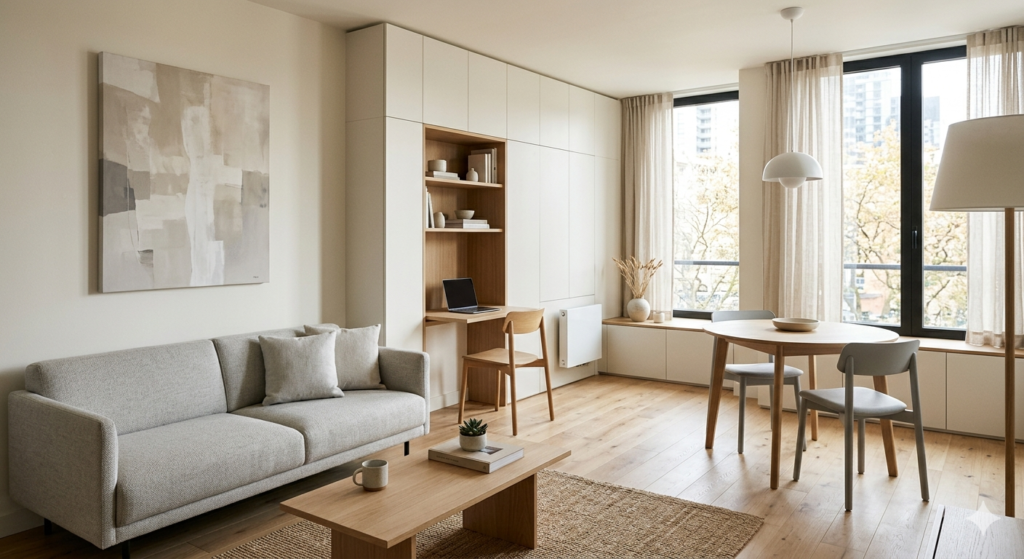
Table of Contents
1. Essential Furniture Only — The Minimalist Starting Point
The first rule of a minimalist small apartment setup is this: every piece of furniture must earn its place. If it only does one job, think twice before bringing it in. If it does two or three jobs, it belongs.
Here is the essential furniture list that actually works for a compact space:
- A sofa bed or daybed — your main seating and guest sleeping solution in one
- A platform bed with built-in storage drawers — eliminates the need for a separate dresser
- A wall-mounted fold-down desk — your home office that disappears when the workday ends
- A nesting coffee table set — takes up the footprint of one table, expands when needed
- One tall, narrow bookshelf — vertical storage that does not eat floor space
That is genuinely it. Resist the pull of the accent chair you do not need, the second side table, the decorative ladder with nowhere to go. Every extra piece of furniture is a piece of floor you are permanently giving away.
For a deeper look at furniture choices by room, check out our room-by-room guide to maximizing small apartment space.
2. Smart Storage Tools — The Backbone of a Minimalist Small Apartment Setup
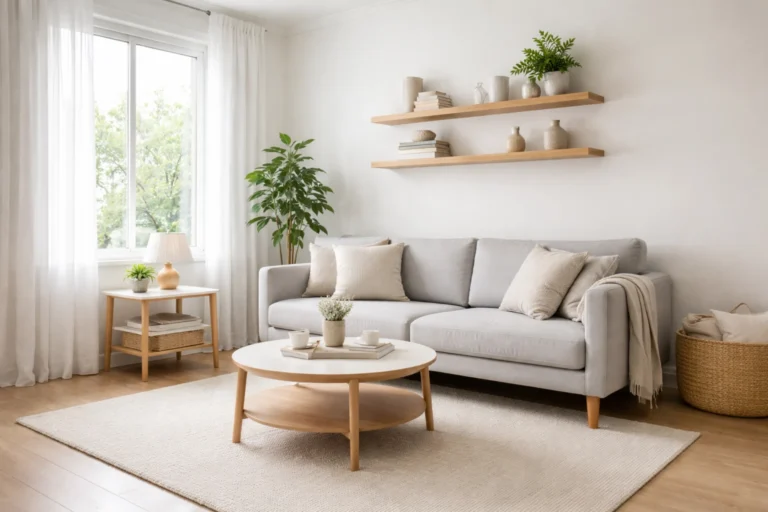
Minimalism does not mean having nowhere to put your stuff. It means having smart, intentional storage so that everything has a home and clutter never gets a chance to build up. These are the tools that make that possible.
Compact Storage Systems
A well-chosen compact storage system does the work of three separate pieces of furniture. The SONGMICS Modular Cube Storage Organizer is a strong starting point — you configure it to fit your exact wall space, it holds everything from books to folded clothes, and it looks intentional rather than improvised.
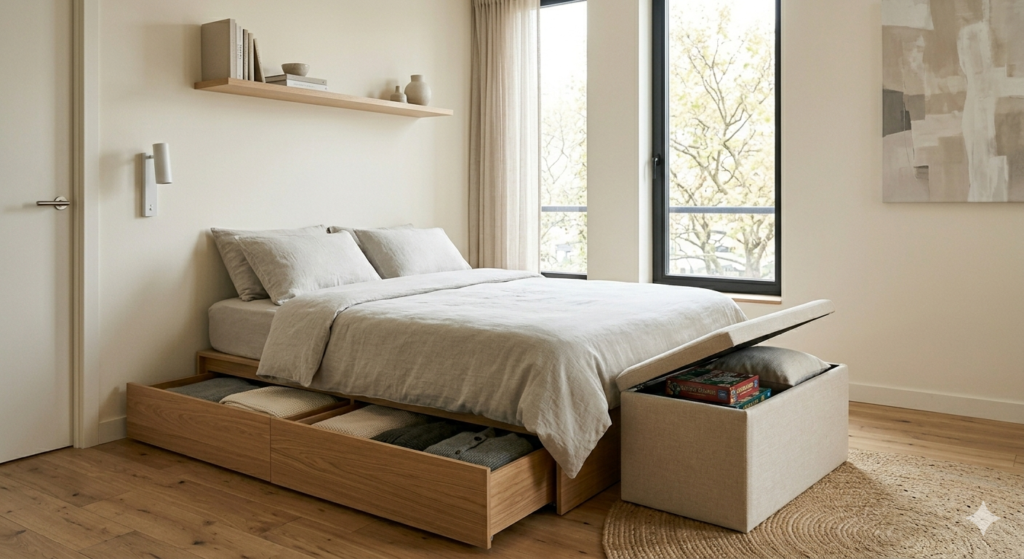
For the bedroom, the VASAGLE Storage Bed Frame with Drawers turns dead floor space into a full dresser’s worth of storage — without adding a single piece of furniture to the room.
Modular Shelving
Modular shelving is one of the smartest investments for a minimalist apartment because it grows and adapts with you. The Prepac Floating Wall Mounted Shelving System keeps floor space completely free while giving you serious vertical storage for books, plants, and everyday items. Mount it above the desk, above the sofa, or along an empty hallway wall.
According to Architectural Digest, vertical storage is consistently ranked as the single most effective strategy for small-space living — and modular wall shelving is the easiest way to implement it without committing to permanent built-ins.
Drawer Organizers
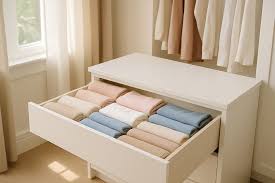
Drawers without organizers are just contained chaos. The OXO Good Grips Drawer Organizer Set uses interlocking modular trays to create a custom layout for any drawer — kitchen, bathroom, bedroom, desk. When every drawer is organized, the entire apartment feels more under control.
For a full breakdown of the best stackable bins and organizers by type, see our guide to the best stackable storage bins for small apartments.
3. Hidden Storage Tricks — Space You Did Not Know You Had
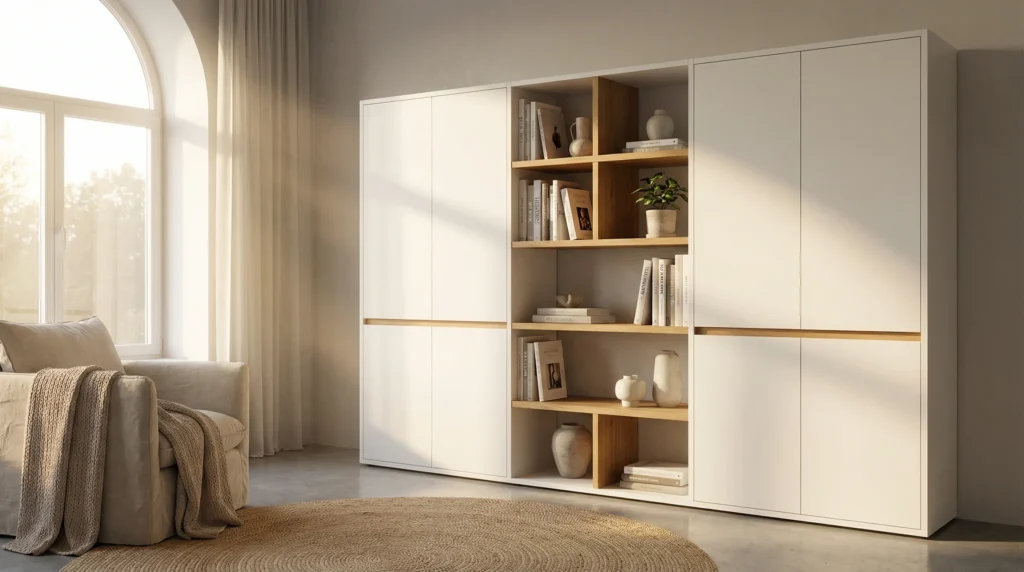
A truly calm minimalist space hides its storage. The goal is for guests to walk in and wonder how everything fits — because none of the storage is visible. Here is where to find it.
The Space Under Everything
Under the bed, under the sofa, under the coffee table — these gaps are free storage that most people completely ignore. Low-profile wheeled storage bins slide in and out effortlessly and can hold a full season of clothes, spare bedding, or anything you use infrequently.
Ottomans and Benches That Open Up
Any ottoman or bench that does not open up for storage is wasting its potential in a small apartment. A large storage ottoman at the foot of the bed or in front of the sofa holds throws, remote controls, books, and anything else that would otherwise sit out on surfaces.
Above the Door and Above Eye Level
The space above door frames and above eye level on shelves is almost always empty in small apartments. Floating shelves installed at ceiling height — or even just above the door frame — are perfect for storing rarely-used items in matching baskets. Out of sight, out of mind, but still accessible when you need them.
As The Spruce points out, using the full vertical height of a room — all the way to the ceiling — can effectively double your usable storage in a small space without adding any floor furniture at all.
4. Decluttering Strategy — The Foundation Everything Else Is Built On
No storage system in the world will make a small apartment feel calm if there is simply too much stuff in it. The minimalist small apartment setup only works when you are ruthless — and systematic — about what stays.
The One-In One-Out Rule
This is the simplest and most effective ongoing rule: every time something new comes in, something old goes out. New jacket? An old one gets donated. New kitchen gadget? Something else leaves the cabinet. It keeps the volume of your possessions permanently in check without requiring a big seasonal overhaul.
The 90-Day Test
For anything you are on the fence about: ask yourself when you last used it. If the honest answer is more than 90 days ago and it is not seasonal, it probably does not need to live in a small apartment. Donate it, sell it, or store it elsewhere. The goal is that everything in your apartment is something you actively use or genuinely love.
Declutter by Category, Not by Room
This approach — popularized by Marie Kondo — works particularly well in small apartments where the same category of item (books, clothes, kitchen tools) tends to scatter across multiple areas. Pulling everything of one type together at once lets you see the true volume of what you own and make clearer decisions about what stays.
5. Creating a Calm Living Space — The Minimalist Finish
Once the furniture is right and the storage is sorted, the final step is making the space feel genuinely calm — not just organized, but restorative. This is where your minimalist small apartment setup goes from functional to something you actually want to come home to.
Commit to a Neutral Base Palette
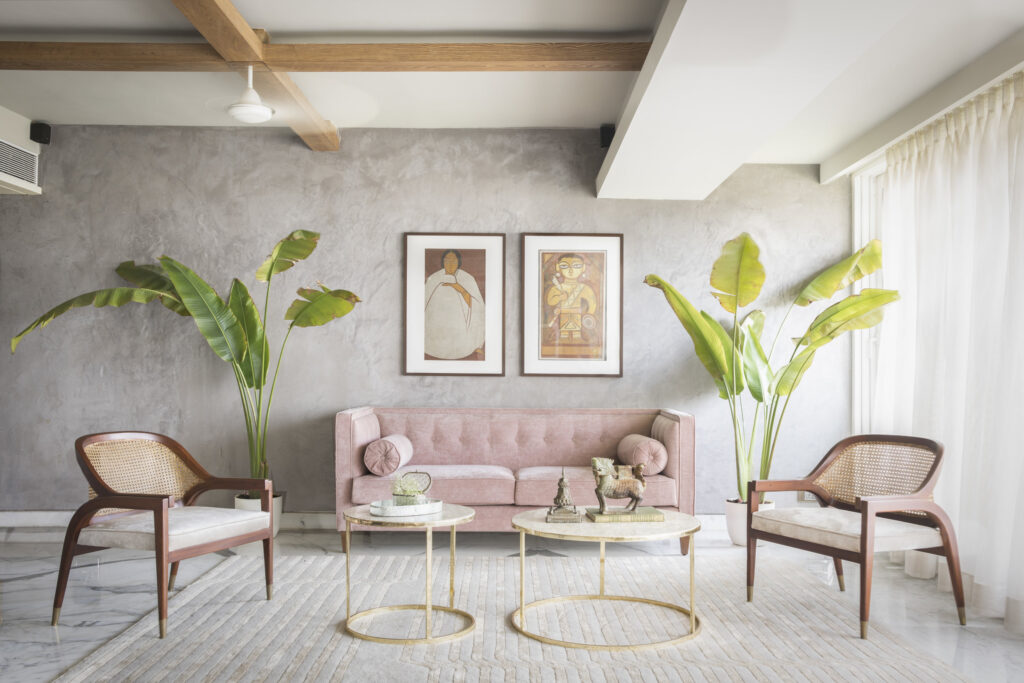
Whites, warm greys, soft beiges, and natural wood tones make a space feel larger and quieter. If you want color, introduce it through a single accent — a cushion, a plant pot, a throw — rather than across walls and multiple furniture pieces. The less visual noise, the more breathing room.
Keep Surfaces Mostly Clear
This is the single habit that has the biggest visual impact. Countertops, coffee tables, and shelves should hold only what is intentional — a plant, a candle, one decorative object at most. Everything else lives in storage. When surfaces are clear, even a small apartment feels spacious.
Let Light Do the Work
Natural light is the most powerful tool in a small apartment. Keep window areas clear of furniture and heavy curtains. Use sheer panels instead of blackout drapes in living areas. Add a large leaning mirror opposite a window to effectively double the light in a room. See on Amazon →
Add One or Two Living Plants
Plants bring warmth and life to a minimalist space without adding visual clutter. A single large-leaf plant in a corner (a monstera, a fiddle-leaf fig, a snake plant) does more for a room’s atmosphere than a shelf full of decorative objects. According to Healthline, indoor plants also measurably reduce stress and improve air quality — both excellent bonuses for a calm living space.
Final Thoughts: Less Really Is More
The minimalist small apartment setup is not about deprivation — it is about intention. When every piece of furniture earns its place, every item has a home, and every surface is given room to breathe, a small apartment stops feeling like a limitation and starts feeling like exactly enough. Start with one section of this guide, implement it fully, and build from there. The calm you are looking for is already in the space — you just need to clear the way for it.
Found this helpful? Bookmark it, share it with someone who is moving into their first apartment, or browse our other guides for more practical small-space solutions.
Frequently Asked Questions
What is a minimalist small apartment setup?
It is an approach to furnishing and organizing a small apartment that prioritizes only what is essential and functional — multi-purpose furniture, intentional storage, and clear surfaces — creating a space that feels calm, spacious, and easy to maintain.
How do I start a minimalist setup in a small apartment?
Start by decluttering — remove everything that you do not actively use or genuinely love. Then evaluate your furniture: keep only multi-functional pieces. Finally, invest in smart storage so everything has a designated home. Tackle one room or one category at a time rather than trying to overhaul everything at once.
What furniture do I actually need in a minimalist small apartment?
The essentials are: a sofa or sofa bed, a bed with built-in storage, a wall-mounted or fold-down desk, a nesting coffee table, and one tall storage shelf. Everything beyond that should be questioned before it comes through the door.
How do I make a minimalist apartment feel warm and not cold?
Warmth comes from texture and organic elements, not quantity. Use a chunky knit throw, a jute rug, natural wood tones, and one or two plants. Warm-toned lighting (2700K–3000K bulbs) also makes a huge difference — harsh white light is the enemy of a cozy minimalist space.
Is a minimalist setup practical for everyday living?
Absolutely — in fact, it is more practical than a cluttered setup because everything is easier to find, easier to clean, and easier to maintain. The initial decluttering takes effort, but once the system is in place, day-to-day living becomes noticeably smoother.